Thomas Singleton’s presumed-dead status
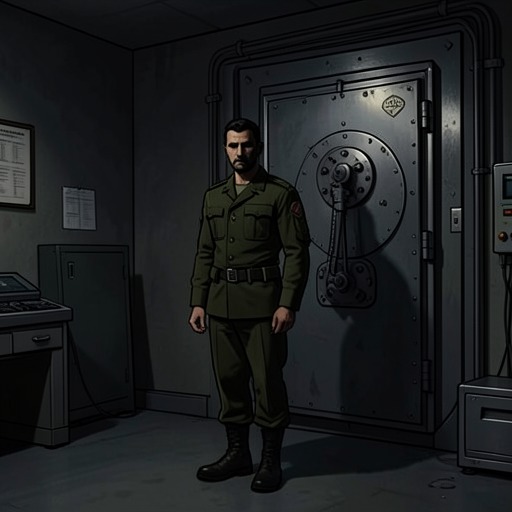
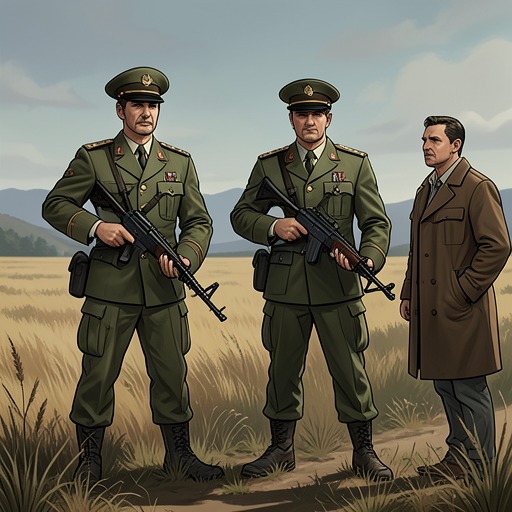
Down Cemetery RoadThomas Singleton’s presumed-dead status is not a settled fact but a contradiction at the centre of the search for his daughter, Dinah Singleton. A Ministry of Defence press release places Thomas Singleton’s death four years before the more recent report of his death; the two accounts cannot be reconciled by the information available here. The discrepancy turns a report of death into a question about what happened, who knew, and where Dinah might be found.
The contradiction in the official account
Joe Silvermann’s letter to Sarah Trafford treats the discrepancy as a reason to involve the Ministry of Defence. According to the press release he cites, Thomas Singleton died four years earlier. Joe asks how he could therefore have died again so recently, while allowing that the department might know nothing about the later report. His proposal is practical rather than conclusive: the Ministry of Defence is better placed to investigate, and discreet answers might prevent the matter from attracting press attention.
The accompanying letter makes that inquiry official. Joe has set out the bare facts of Thomas Singleton’s death and Dinah Singleton’s disappearance in a neatly typed letter to the Ministry of Defence, complete with his reference number. Sarah notices that the number has been removed from his office files, an absence that suggests the inquiry has already become difficult to track. Neither the press release nor Joe’s letter resolves the discrepancy. Instead, they establish two competing time claims and make the gap between them the central fact requiring explanation.
A lead to Dinah Singleton
For Joe, the unanswered question about Thomas Singleton’s death is inseparable from the search for his daughter. He writes that wherever the answer lies, Dinah Singleton will be there too. This is a working inference, not a confirmed account of what happened to her, but it gives the death discrepancy immediate investigative importance: the question is not only whether the official timeline is wrong, but whether following it can lead to the missing girl.
Joe’s letter also shows how he intends to press the inquiry. He acknowledges that the Ministry of Defence may already know what happened and suggests that providing a few answers could spare it unwanted publicity. His appeal to official pragmatism neither establishes that the department is concealing information nor rules out its ignorance. It exposes the uncertainty at the heart of the case: Sarah Trafford and Joe Silvermann do not yet know whether they are asking an uninformed institution for help or confronting one that understands more than it admits.
The inquiry’s human cost
The contradiction has consequences beyond the documents. Amos Crane sees a copy of Joe Silvermann’s letter and recognizes it as an unwelcome display of persistence by the detective Sarah Trafford hired. In Amos Crane’s account, the inquiry prompted him to allow Axel Crane to deal with Joe Silvermann; he calls the killing a response to the threat Joe’s questions posed. His reasoning shows how a discrepancy in an official death account can endanger the person trying to investigate it. It does not make the account clearer; it makes the cost of pursuing clarity unmistakable.
Sarah Trafford’s accusation to Rufus that he was late on the night the bomb went off supplies another point in the surrounding chronology, but it does not establish when Thomas Singleton died or settle the competing reports. Later, Michael Downey tells Sarah Trafford that she was on the bridge after Thomas Singleton was killed. That recollection confirms the death as an event Michael refers to, while leaving the earlier official account and its relation to the more recent report unresolved.
Narrative significance
The status works as an evidentiary fracture rather than a simple secret already explained. A press release gives death the appearance of administrative certainty; the later report makes that certainty unstable. Joe Silvermann’s carefully prepared letter converts the inconsistency into a formal question, Sarah Trafford’s search connects it to Dinah Singleton, and Amos Crane’s response reveals the danger of asking it aloud. The materials supplied here do not provide an authoritative reconciliation of the two reports. Their force lies in showing how an apparently settled death can become an investigative lead—and how that lead draws a missing child, official silence, and lethal resistance into the same case.